
Experimental Cyanotypes
Making photographs on tortillas (?!) and dyeing images with plants

Cyanotypes are a form of solar photography known for their incredible rich blue hues, and they offer a whole world to explore. All you need is two chemicals, mixed up in equal percent, and then you’re set to make a cyanotype from a photograph or an object, and the surface onto which you print is limitless…
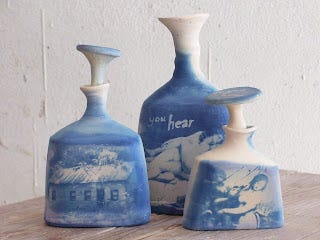
Cyanotype on Ceramics by Rebecca Barfoot
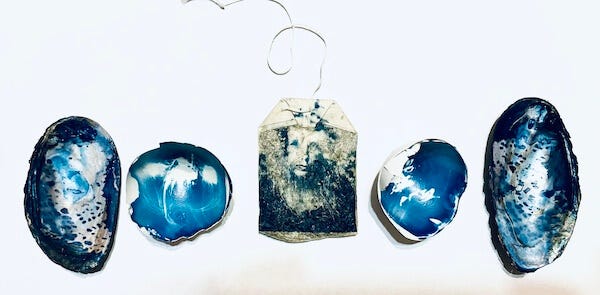
Émilie Léger on Alternative Photography showcases her work on oyster shells, eggshells, and tea bags.
For a fun ride, take a peek at James Asava’s work “The Impermanence of Being” in which he cyanotypes sunglasses, soap, corn tortillas and more. His whole portfolio is quite incredible - it’s worth taking a look through his other work as well.
Here are a few examples of recent cyanotypes I’ve created;


Aside from the beautiful blue created by cyanotypes, there is the possibility of toning your image and altering the colour. There are two main methods;
create a strong dye solution and dip the cyanotype in it
bleach the cyanotype first, then add it to a dye bath to alter the colour
It seems like which option you do is dependent on the plant as well as the aesthetic you’re going for. This forum has a great discussion on toning cyanotypes photrio.com, and below are some gorgeous examples from the forum that compare the differences between bleaching or not, with different parts of a birch tree as the dye matter.
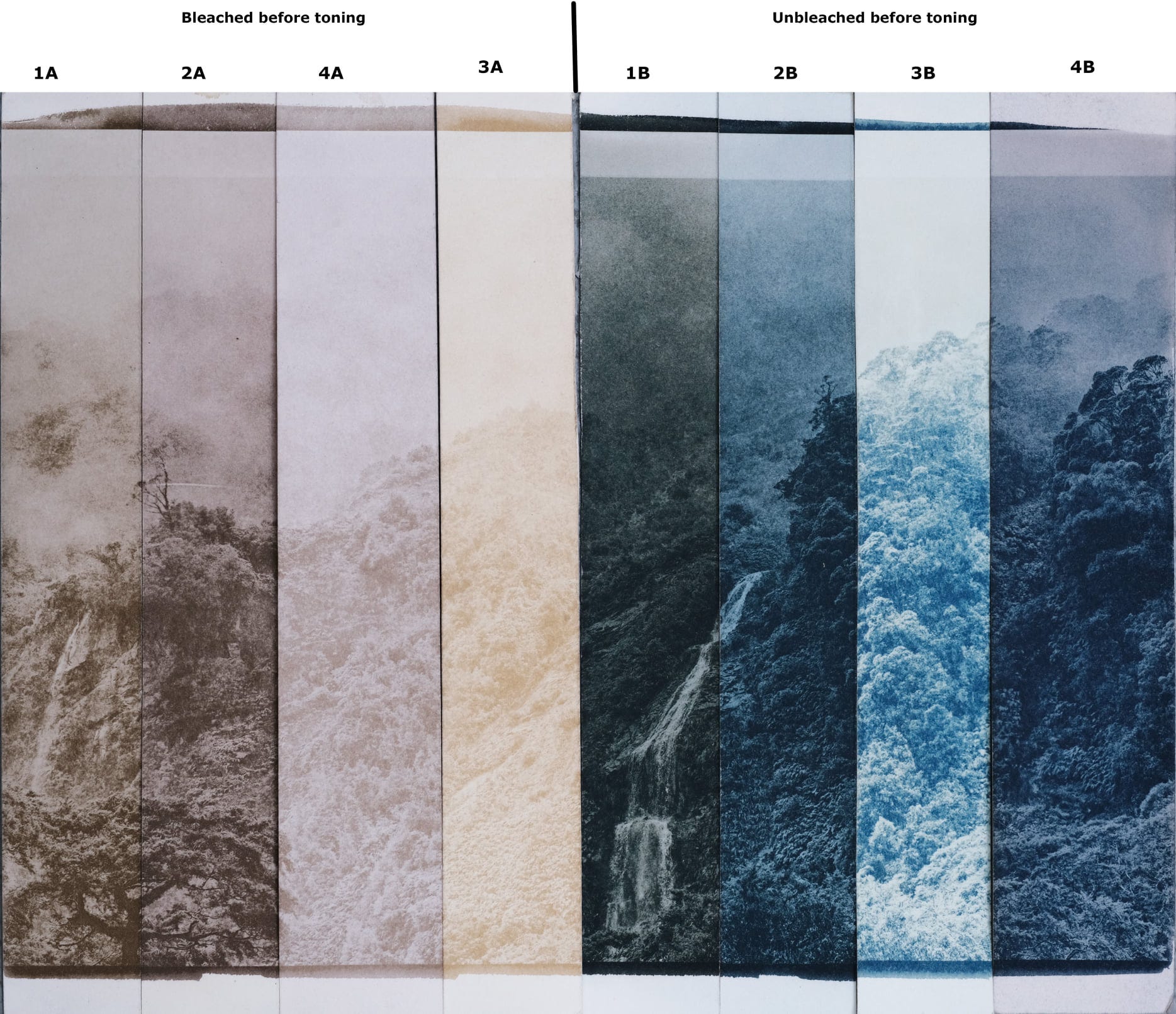
(1: fresh birch leaves 2. mature/brown birch catkins 3. fresh birch 4. Birch bark, infused for 15 min with boiling water). How gorgeous are those results?!
A recipe for bleaching with borax;
soak cyanotype in water for 5-10 minutes
dissolve 1 tsp of borax in 2 cups water
place cyanotype in borax mixture keeping an eye on it as it bleaches quickly
rinse off the cyanotype
In the same photrio thread, another person added their tests with a variety of plants;
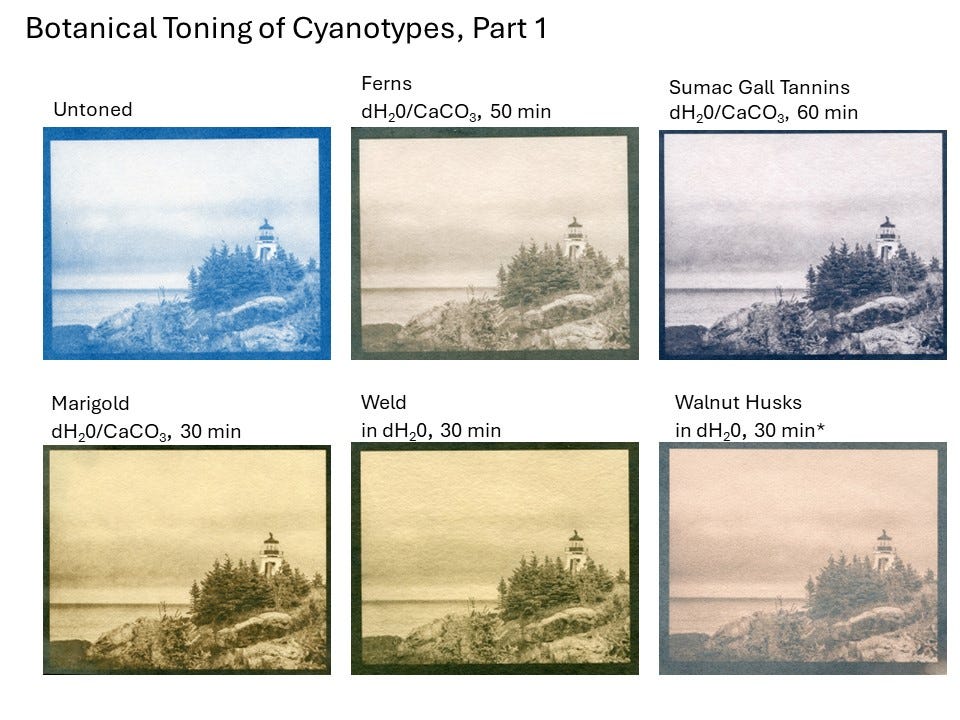
I love the variety of tones they achieved - the sumac gall tannins and marigolds in particular have really nice contrast.
David Fearn has a handy post about his favourite toning plants and gets a gorgeous deep green with fenugreek seeds;
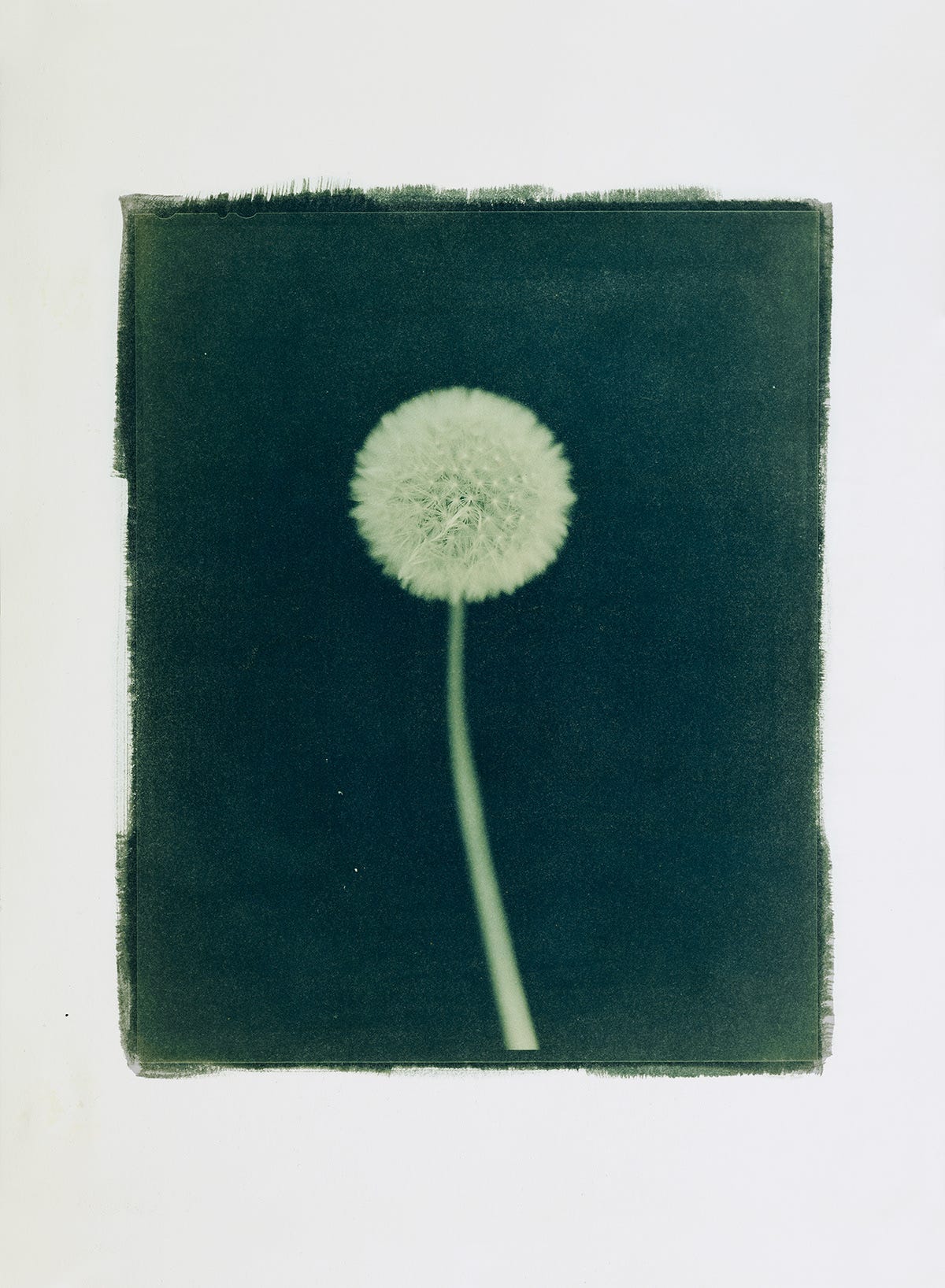
(Fenugreek steeped in boiling distilled h2o for 15 mins. Toning time 1 hr)
He mentions how much water pH/chemistry affects the colour when toning, and how some colours just aren’t achievable without controlling the water pH. After creating a cyanotype, he just does a quick rinse, then squeegees the excess moisture off to prevent the image from bleaching.
Here is my first round of test toning a cyanotype;
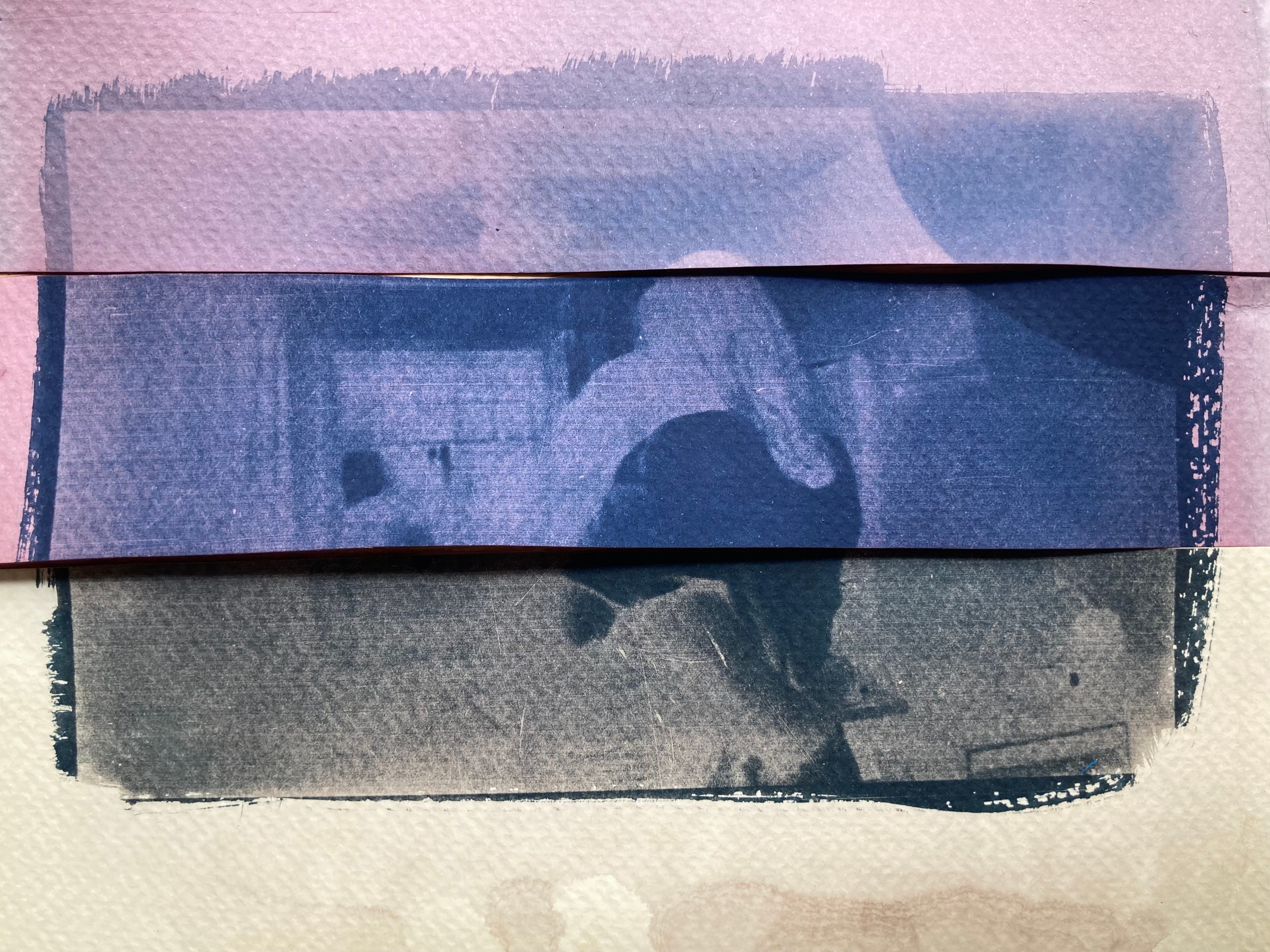
The uppermost strip was bleached, then toned for an hour in sumac berry tea. The middle strip was soaked in the same sumac tea but I bleached it first, and the bottom strip was bleached and toned with raspberry leaves. The sumac didn’t so much alter the cyanotype colouration itself, it more so just altered the background - it is a nice colour however!
The raspberry leaf worked nicely and gave a lovely gray/blue tone, however it does stain the white of the paper as well. Maybe next I should try bleaching it first then adding it to the raspberry leaf infusion…
Thanks for joining me in this cyanotype exploration! Stay tuned for more solar photography experiments.
I love these!
I love the natural blue tone, but it's cool to see how the contrast is also affected by the colours you dye it. So fascinating!!